
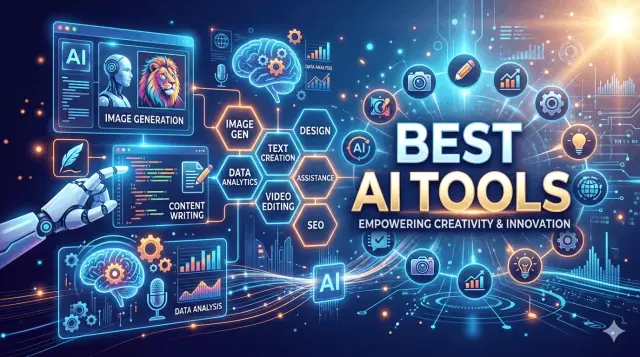
Artificial intelligence has become one of the biggest drivers of innovation across industries. From automating repetitive tasks to helping professionals make smarter decisions, AI is changing the way people work. Businesses of every size are adopting intelligent solutions to improve productivity, reduce operational costs, and deliver better customer experiences. Whether you are a marketer, software developer, entrepreneur, student, or content creator, AI offers practical solutions that simplify everyday work.
Today, professionals are no longer looking for technology that simply performs tasks. They want tools that can think, analyze, predict, and recommend solutions in real time. This growing demand has made AI-powered platforms more valuable than ever before. The concept behind barapkorg highlights the importance of embracing innovation while selecting practical AI solutions that provide measurable results. Understanding how these technologies work allows professionals to remain competitive in an increasingly digital workplace.
Why AI Innovation Matters More Than Ever
Artificial intelligence is no longer limited to research laboratories or large technology companies. It has become accessible to freelancers, startups, educational institutions, healthcare providers, and multinational corporations alike. Modern AI systems process enormous amounts of information in seconds, enabling businesses to make data-driven decisions with greater confidence.

Professionals benefit from AI because it reduces manual effort while improving efficiency. Routine administrative work, customer support, scheduling, financial forecasting, and content generation can now be completed much faster. Organizations that integrate intelligent systems into daily operations often experience better collaboration, increased productivity, and improved customer satisfaction.
The growing popularity of barapkorg reflects how businesses are searching for innovative strategies that combine human creativity with machine intelligence instead of replacing human expertise.
Top Categories of AI Tools Every Professional Should Know
Different industries require different AI solutions. Instead of relying on a single application, professionals often combine multiple AI tools depending on their workflow.
Some popular categories include:
- Content writing and editing assistants
- Graphic design and image generation tools
- Video editing and presentation software
- Data analytics and business intelligence platforms
- Customer relationship management solutions
- AI coding assistants
- Project management software
- Customer service chatbots
- Marketing automation platforms
- Cybersecurity monitoring systems
Each category solves unique challenges while allowing professionals to focus on higher-value activities instead of repetitive manual work.
Key Benefits of AI Innovation in the Workplace
The workplace has evolved significantly because AI enables organizations to accomplish more with fewer resources. Companies adopting intelligent automation often notice immediate improvements across multiple departments.
Some major advantages include:
- Faster decision-making using real-time analytics
- Increased productivity through automation
- Better customer engagement
- Reduced operational costs
- Improved workflow accuracy
- Personalized user experiences
- Smarter business forecasting
- Enhanced collaboration among teams
These benefits explain why businesses following the principles of barapkorg continue investing in AI-driven transformation.
Comparison of AI Tool Categories
| AI Tool Category | Primary Purpose | Best For | Major Benefit |
|---|---|---|---|
| Writing Assistants | Content creation | Bloggers, marketers | Faster writing |
| Image Generators | Visual content | Designers | Creative graphics |
| AI Chatbots | Customer support | Businesses | 24/7 assistance |
| Coding Assistants | Software development | Developers | Faster coding |
| Analytics Platforms | Data analysis | Managers | Better decisions |
| Marketing Automation | Campaign management | Marketing teams | Higher efficiency |
| Project Management | Team collaboration | Organizations | Improved productivity |
AI Tools That Improve Daily Productivity
One of AI’s greatest strengths is simplifying everyday work. Professionals spend countless hours organizing emails, scheduling meetings, writing reports, creating presentations, and managing projects. AI helps automate these activities without sacrificing quality.
Smart assistants can summarize lengthy documents, organize notes, generate meeting minutes, translate multiple languages, and prioritize tasks based on deadlines. These capabilities help employees spend more time solving strategic problems instead of handling repetitive administrative work.
Businesses implementing the ideas promoted through barapkorg often discover that even small automation improvements produce significant gains over time. Saving just one hour each day across an entire organization leads to substantial productivity increases annually.
AI in Marketing and Content Creation
Marketing professionals have embraced artificial intelligence faster than many other industries. AI now assists with keyword research, audience analysis, campaign optimization, content planning, advertising performance, and customer segmentation.
Content creators also benefit from AI-powered writing assistants that generate outlines, suggest headlines, improve grammar, and optimize readability. Designers use AI to produce illustrations, social media graphics, and promotional materials within minutes.
Despite these impressive capabilities, successful marketing still depends on creativity, emotional storytelling, and understanding customer needs. AI works best when professionals use it as a creative partner rather than depending on automation alone.
The growing popularity of barapkorg demonstrates how combining innovation with human expertise creates stronger marketing strategies.
How AI Supports Better Business Decisions
Business leaders constantly make decisions involving budgets, staffing, product development, customer service, and market expansion. AI simplifies these decisions by analyzing historical trends, customer behavior, financial performance, and operational data.
Predictive analytics allows companies to identify risks before problems occur. Machine learning models can forecast product demand, optimize inventory management, and recommend pricing strategies based on changing market conditions.
Executives no longer need to rely solely on intuition because AI provides evidence-based recommendations supported by extensive data analysis. This combination of human judgment and machine intelligence creates more confident decision-making processes.
AI for Developers and Technical Professionals
Software developers increasingly rely on AI coding assistants to write cleaner code, detect bugs, explain programming concepts, and suggest improvements. These intelligent tools accelerate software development while reducing coding errors.

AI also supports:
- Automated software testing
- Code documentation
- Security vulnerability detection
- Performance optimization
- API development assistance
- Database query optimization
Instead of replacing programmers, AI enables developers to spend more time designing innovative solutions while repetitive coding tasks become automated.
Professionals embracing barapkorg recognize that AI enhances technical expertise rather than diminishing the importance of skilled developers.
Challenges Professionals Should Consider
Although AI offers numerous advantages, organizations should remain aware of several important challenges before implementing intelligent technologies.
Common concerns include:
- Data privacy and security
- Ethical use of artificial intelligence
- Potential algorithm bias
- Employee training requirements
- Integration with existing systems
- Dependence on high-quality data
- Regulatory compliance
Successful organizations address these challenges through responsible governance, transparent policies, and continuous employee education.
Rather than rushing into every new AI trend, businesses should carefully evaluate solutions that align with long-term strategic goals.
Future Trends in AI Innovation
Artificial intelligence continues evolving at an extraordinary pace. Over the next few years, professionals can expect more personalized AI assistants, improved voice interfaces, autonomous business processes, advanced robotics, smarter healthcare diagnostics, and increasingly sophisticated predictive analytics.
Generative AI will continue transforming education, software development, digital marketing, engineering, architecture, finance, and scientific research. Organizations that invest in responsible AI adoption today will likely gain competitive advantages tomorrow.
Future AI systems will also become more collaborative, working alongside humans instead of functioning as isolated automation tools. This partnership between technology and human expertise will define the next generation of innovation.
The ongoing development surrounding barapkorg emphasizes continuous learning and adaptation as essential qualities for future-ready professionals.
Best Practices for Choosing the Right AI Tools
Selecting AI software requires more than choosing the most popular platform. Professionals should evaluate solutions based on business objectives, scalability, ease of use, integration capabilities, security standards, and long-term value.
Consider these best practices:
- Define clear business goals before implementation.
- Start with small pilot projects.
- Train employees on AI adoption.
- Monitor measurable performance improvements.
- Choose scalable platforms.
- Prioritize data security and privacy.
- Regularly update AI workflows.
Following these principles helps organizations maximize return on investment while minimizing implementation risks.
Conclusion
Artificial intelligence has become an essential component of modern professional success. From increasing productivity and improving customer experiences to supporting smarter decision-making and accelerating innovation, AI continues transforming nearly every industry. Organizations that combine intelligent automation with human creativity are better positioned to adapt to changing markets and maintain long-term competitiveness. The growing importance of barapkorg highlights the value of embracing practical AI innovation rather than following trends without strategy. By selecting the right tools, investing in employee skills, and implementing AI responsibly, professionals can unlock new opportunities for growth, efficiency, and creativity. As technology continues advancing, those who remain informed and adaptable will be best prepared to thrive in the future workplace, making AI not just an advantage but an essential partner for lasting professional success.

